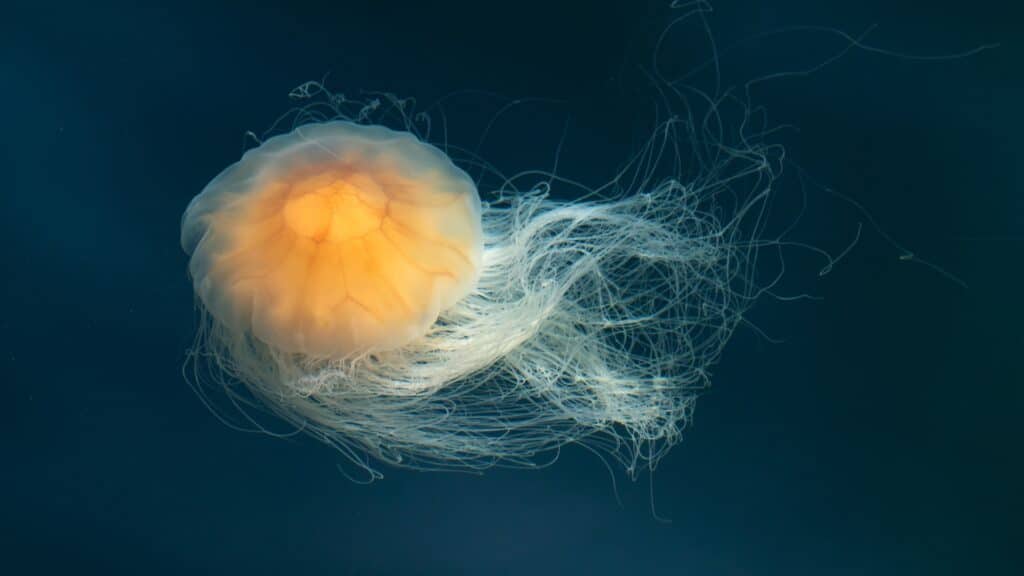
Why Lion’s Mane Jellyfish Filled Maine Beaches
The number one question I got asked this summer from locals and tourists alike, was “why are there so many jellyfish on the beaches”. Today I’ll be shedding some light on the infamous Lion’s Mane jelly.
What are sea jellies?
Sea jellies (more commonly known as jellyfish) are members of Cnidarian (pronounced nie-dare-ian) phylum. A large group that includes corals and sea anemones. The reason we are calling them sea jellies instead of jellyfish is because these animals are not a species of fish or even remotely related to fish. These animals lack most organs including heart, gills, blood, and even a brain! They have a very simple nervous system that controls their soft gelatinous bodies and makes them move using a soft undulating motion.
What are Lion’s Mane Jellies?
Lion’s Mane Jellies are the largest sea jelly in the world, with some growing to be 8 feet wide and having tentacles that can be over 100 feet long! These giant jellies eat small fish, plankton, but mostly other jellies! Their huge bodies move slowly through the ocean but primarily rely on currents to move them. Fully grown they have few predators. Some sharks eat them but their main predators are sea turtles (and other Lion’s Mane).
Why were there so many this summer?
Short answer? Warmer summers. With the amount of sunny light we had over the summer, we had a lot more phytoplankton blooms. Phytoplankton are teeny tiny More Phytoplankton means more moon jellies, the most common jelly in the Gulf of Maine, and more of them means more food for the lion’s mane jellies. Another reason we suspect more are being seen is that with the gorgeous weather we had over the summer, everyone wants to go to the beach, and with more people at the beach they’re more likely to see jellies washed in by the tides.
What should I do if I get stung?
Although they pack a painful sting, Lion’s Mane Jelly stings aren’t lethal, but can last a while depending on how many tentacles you have been stung by or are stuck to you. One of the best remedies is flushing the area profusely with vinegar. Compounds in vinegar deactivate the stinging cells of the jelly.
Photo at top courtesy of Lysekil Municipality, Sweden.