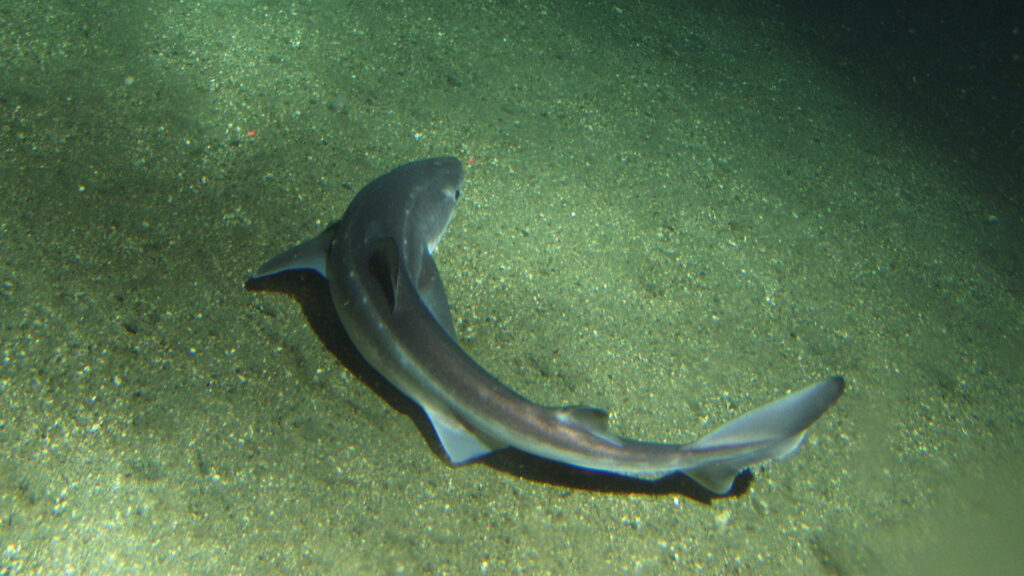
The dog days of summer are here, and so are the dogfish! Despite their canine name, spiny dogfish are actually sharks. Measuring under five feet, they are the second smallest shark species in the Gulf of Maine (just behind the southern-dwelling chain catshark).
So, how did they earn their name? “Dogfish” comes from their habit of hunting in large, pack-like schools. They feature sharp, mildly venomous spines in front of both dorsal fins that can cause painful swelling if not handled well. You can spot them by their rough grayish-brown skin, compact fins, and surprisingly large eyes.
While we often imagine sharks hunting massive prey, spiny dogfish start small. Juveniles feast primarily on crustaceans, only adding fish, squid, and sea jellies to their diet as they grow. It takes a surprisingly long time for them to reach adulthood, anywhere from six to over 30 years, depending on their sex and food availability. (And unlike humans, male dogfish mature much faster than females!)
Spiny dogfish are extraordinarily long-lived, with some reaching over 100 years in the wild. They also take their sweet time when reproducing. Males and females mate in late summer, and females carry their fertilized eggs internally for up to two years (one of the longest gestation periods of any vertebrate) before giving birth to live pups in the winter.
Why Are They So Important?
As key mid-level predators, spiny dogfish act as essential balancing agents for the marine food web. By preying on crustaceans, small fish, and jellies while serving as a vital food source for larger predators like cod, tuna, and seals, they keep species populations stable. If dogfish were to disappear, the entire food chain would feel the ripple effect. Jellyfish populations could surge unchecked, disrupting smaller prey species, while larger marine animals would lose a reliable food source. Because they mature so slowly and carry young for two years, losing these sharks would take decades to recover from, leaving the ecosystem far more vulnerable.
Helpful Efforts
Protecting spiny dogfish and their habitats starts with the choices we make every day. Reducing single-use plastics is one of the most direct ways to keep floating debris out of the ocean, preventing dogfish from mistaking trash for sea jellies. Supporting sustainable seafood practices and localized marine research also ensures we harvest responsibly without destabilizing fragile predator populations.
Get Involved
Ready to make a real, lasting impact on our local coastal waters? Joining a Shaw Institute beach cleanup is a simple, hands-on way to clear plastic waste from our shores before it ever reaches the sea, protecting spiny dogfish and countless other marine species.
To discover more about spiny dogfish, explore our research, or get involved in upcoming community events, visit us at the Shaw Institute or online at shawinstitute.org.
Did You Know?
Spiny dogfish are actually sharks, not fish.
Despite their canine-inspired name, spiny dogfish are true sharks! They earned the name “dogfish” because they hunt together in large, pack-like schools.
Spiny dogfish carry their young for up to two years.
Female spiny dogfish have one of the longest gestation periods of any vertebrate on Earth, carrying their fertilized eggs internally for nearly two full years before giving birth to live pups.
These small sharks can live to be over 100 years old.
Spiny dogfish are remarkably long-lived, with some individuals reaching over 100 years in the wild. However, they also mature very slowly, taking anywhere from 6 to over 30 years to reach adulthood.
Spiny dogfish actually have mildly venomous spines.
Located right in front of their two dorsal fins, these sharp spines serve as a defense mechanism and can cause painful swelling if the shark is handled carelessly.
Losing dogfish could cause a massive explosion in jellyfish populations.
As vital mid-level predators, spiny dogfish keep the marine food web balanced. Without them to feast on jellies and small prey, jellyfish populations could surge unchecked and disrupt the entire ecosystem.
Single-use plastics directly threaten spiny dogfish diets.
As adult dogfish hunt for sea jellies, floating plastic debris in the water column can easily be mistaken for food, making trash reduction and beach cleanups critical to their survival.