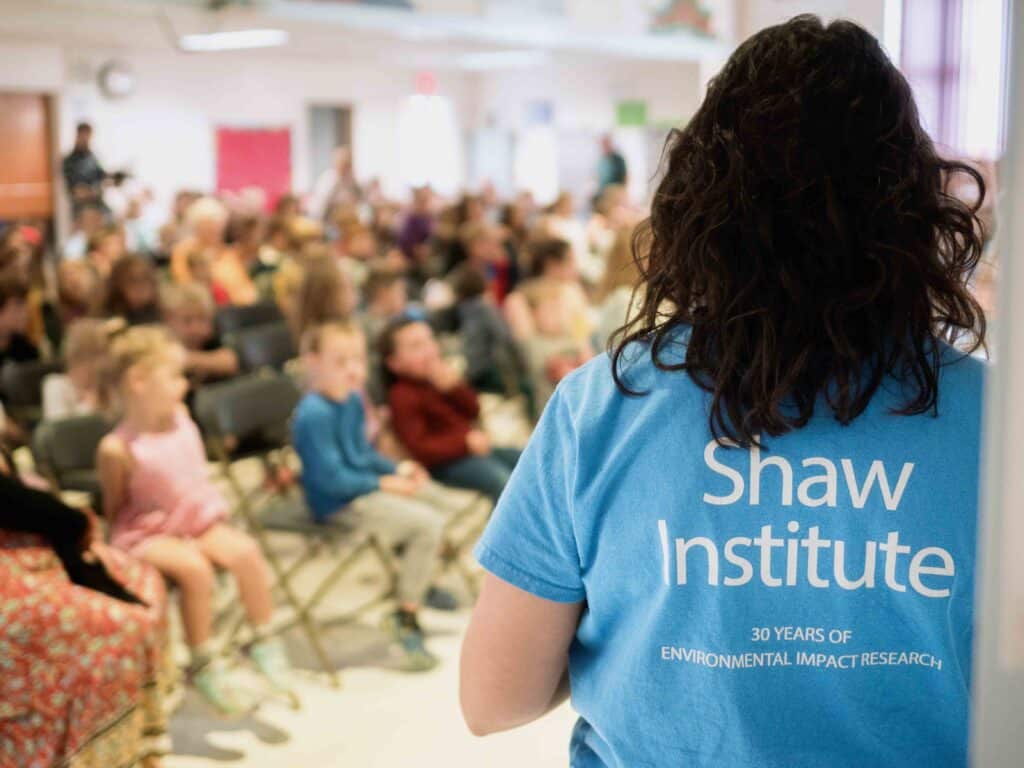
The Shaw Institute hosts “Oceans to Orbits” to inspire the next generation of environmental stewards.
What if we viewed ourselves not merely as passengers on Earth, but as its active crew? That philosophy was the core theme of Oceans to Orbits: Science, Art and Action, a multi-day community initiative held from September 17–19 and hosted by the Shaw Institute.
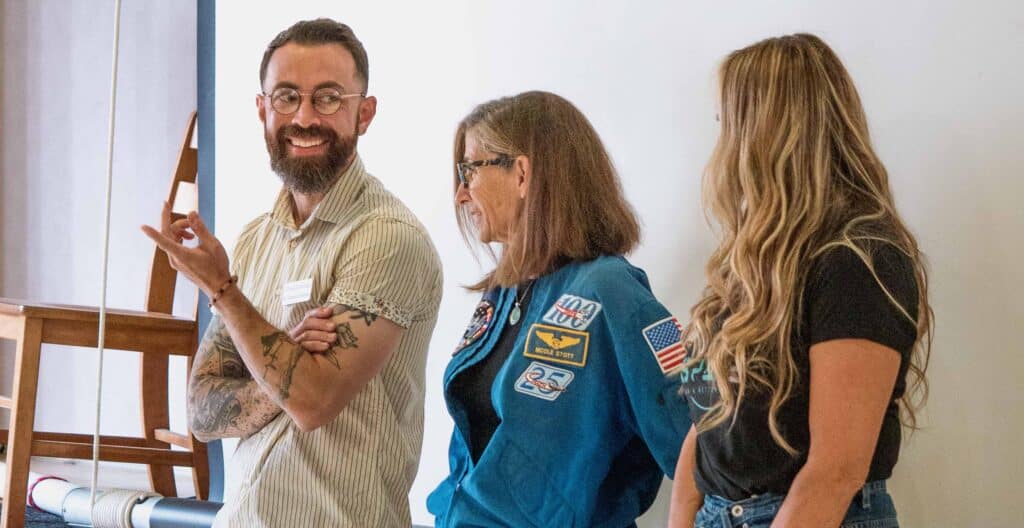
The event brought retired NASA astronaut, aquanaut, author, and artist Nicole Stott alongside “Astronaut Wrangler” Christina Korp to Blue Hill, Maine. Conceived by Blue Hill resident and Shaw Institute volunteer Maria Kolenda, the initiative connected space exploration, art, and ocean stewardship with the Shaw Institute’s core mission of linking environmental and human health.
Inspiring the Next Generation of STEM Leaders
At the heart of Oceans to Orbits was a focus on students, community engagement, and science, technology, engineering, and math (STEM) education. The program actively demonstrated and advocated how space, marine science, and the arts intersect to inspire future scientists, engineers, and astronauts.
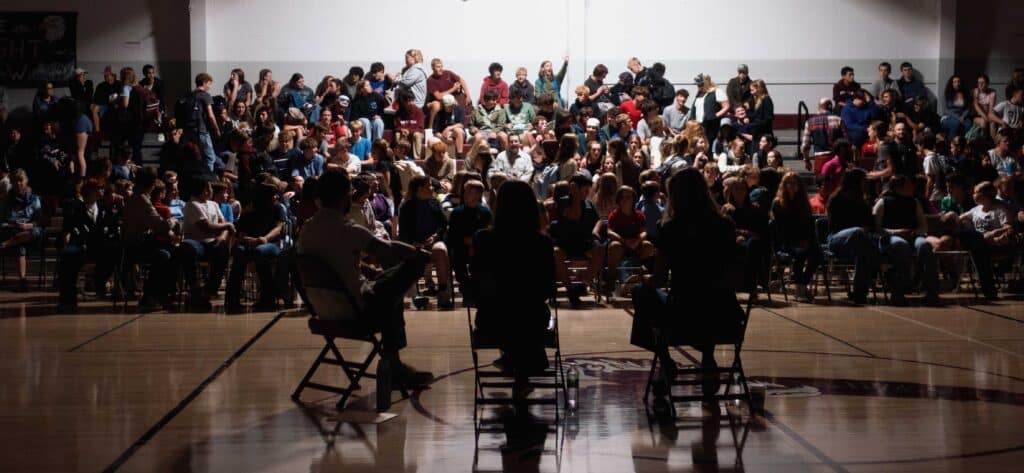
On Thursday, September 17, excited local students gathered to hear inspirational words from a NASA astronaut who had spent a total of 104 days in space as a crewmember of the Space Shuttle and the International Space Station. Executive Director of Shaw Institute, Dr. Charles Rolsky moderated the conversation with Nicole Stott and Christina Korp where they discussed environmental stewardship, scientific discovery, and the responsibilities of being good crewmates on planet Earth.
“Every research project we pursue is an opportunity to empower the communities around us—and every student who walks through our doors is a future scientist, policymaker, or informed citizen,” said Dr. Rolsky, “Oceans to Orbits connects our local work to a much bigger conversation about what it means to care for our planet.”
The Oceans to Orbits event may be over, but the initiative isn’t quite done yet. Dr. Rolsky hopes the Shaw Institute will serve as a place for student inquiry and creation throughout the year, offering students the opportunity to connect their work to a much bigger conversation about what it means to care for our planet.
When students understand how different industries can overlap, they realize that there is no single path into a STEM career and most fields are interconnected. A background in marine biology, for instance, could lead to studying life beneath the icy crust of Jupiter’s moon, Europa, one day, connecting biological studies on earth to space exploration opportunities.
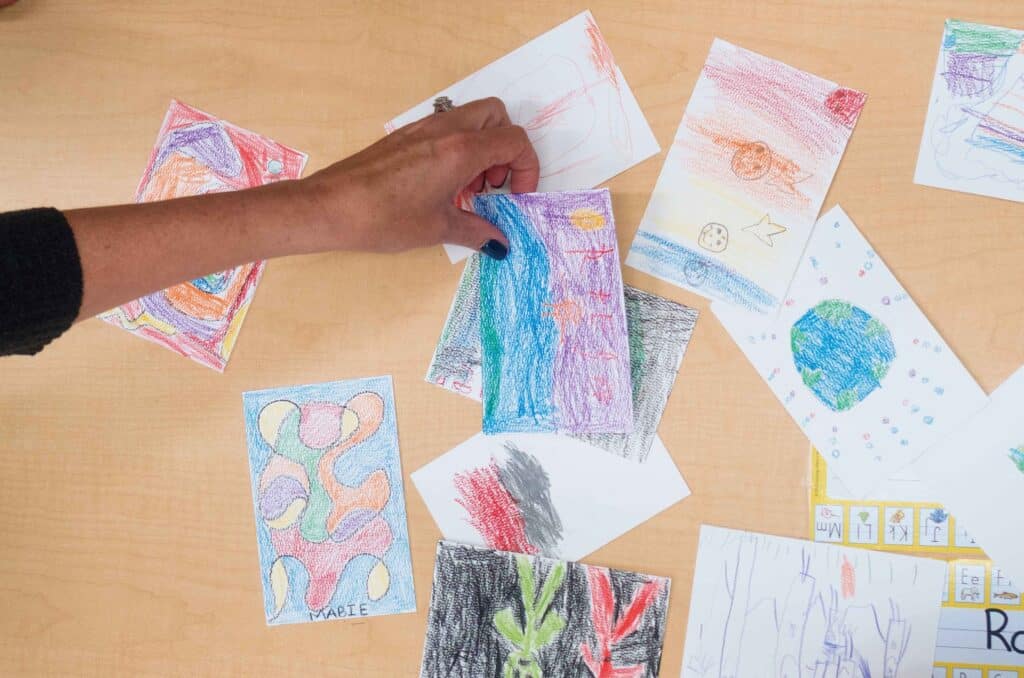
Students also participated in a creative postcard activity, writing messages that will actually fly into space before being returned to the young artists as a one-of-a-kind keepsake.
From Ocean Debris to Art: Youth Creativity on Display
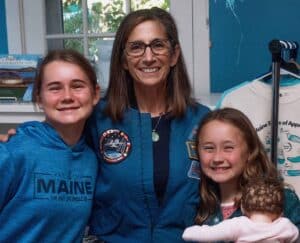
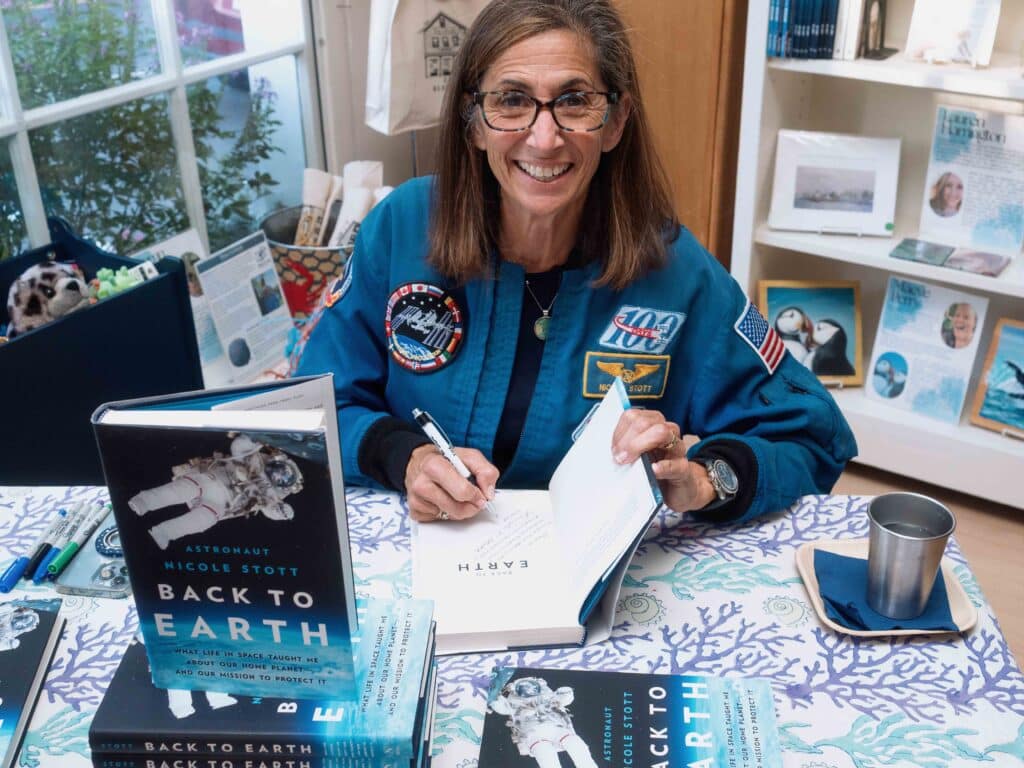
During the afternoon of September 18th, Shaw Institute opened its doors to host the opening of the Oceans to Orbits Artistic Inquiry Lab—a year-long project that will culminate in an exhibition around World Oceans Day in June of 2027 that will give students the opportunity to see their work become part of a larger conversation connecting research, creativity, our local environment, and the wider world. The opening event featured art demos, works in progress, and space-bound postcards created by local students from Blue Hill Harbor School, George Stevens Academy, and Blue Hill Consolidated School. Nicole was in attendance, signing copies of her book, Back to Earth, while chatting with wide-eyed kids and adults alike about how art and science can spark environmental action that can be conducted in space and on Earth.
Broad Community Collaborations
The success of Oceans to Orbits relied on a strong web of community partnerships across schools, local non-profits, and regional businesses that we are grateful to work alongside.
Shaw Institute collaborated closely with educational partners—including George Stevens Academy, Blue Hill Harbor School, and Blue Hill Consolidated School—whose educators are continuing the momentum by incorporating the initiative’s themes into classroom curricula throughout the 2026–27 school year. Shaw Institute is also inviting faculty across all disciplines to think about ways your classes might connect with our Oceans to Orbits Artistic Inquiry Lab project during the 2026–27 school year, and if interested, can inquire about curriculum and arrange a visit to the institute for their class.
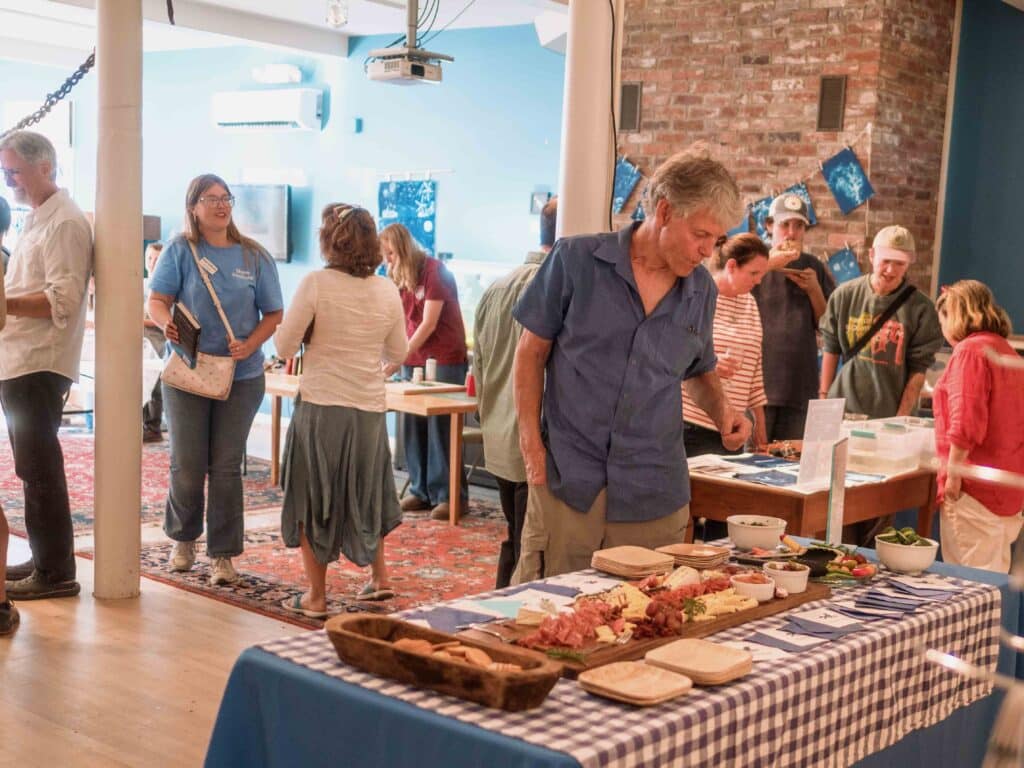
Refreshments at Friday’s public art reception at the Shaw Institute were made possible by generous food donations from local sponsors, including Rioux Catering at The Farmhouse Inn, Humblebee Cafe, Hannaford Supermarkets, and one of our board members, Nell Herrmann.
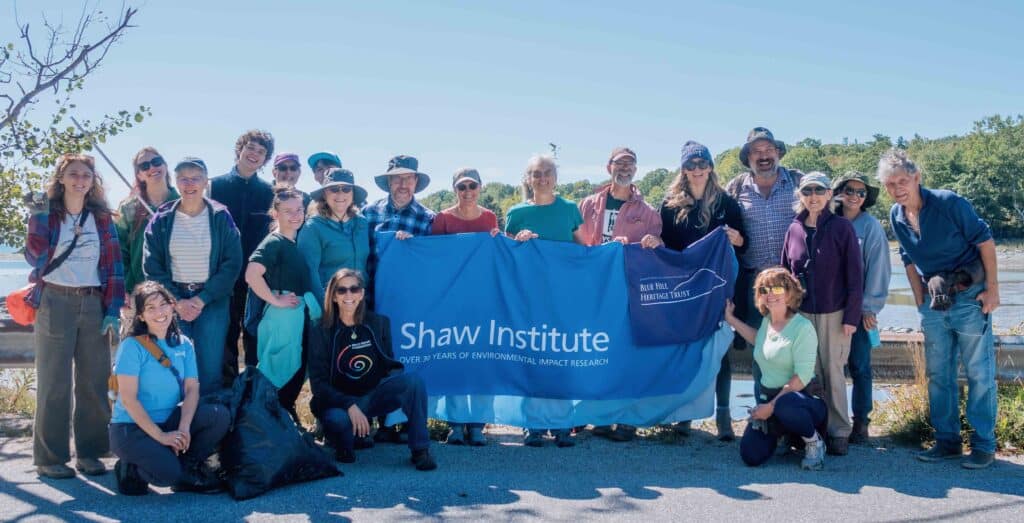
Furthermore, conservation efforts were supported through a partnership with the Blue Hill Heritage Trust on Saturday, September 19, for a community beach cleanup at Carter Nature Preserve in Surry, where volunteers joined Stott and Korp to remove 41 pounds of marine debris from the local coastline.
All efforts reinforcing that community is important and it should be everyone’s mission to protect our home planet, Earth.
A Message of Hope and Action
Drawing on the “Overview Effect”—the transformative perspective of viewing Earth from space—Nicole Stott and Christina Korp reminded the Blue Hill community that small, local actions contribute to global impact.
By bringing together science, creative art, and hands-on conservation, the Shaw Institute and its community collaborators successfully illustrated that everyone has a role to play in protecting our shared home.
Support Future Initiatives
Community-driven efforts like Oceans to Orbits are made possible through the generosity of donors and supporters. Contributions to the Shaw Institute allow us to continue hosting transformative events, conducting vital environmental research, and empowering local youth to meet modern challenges with grace, resilience, and fresh perspectives. To support our mission and help inspire the next generation of changemakers, please consider making a donation to the Shaw Institute today.