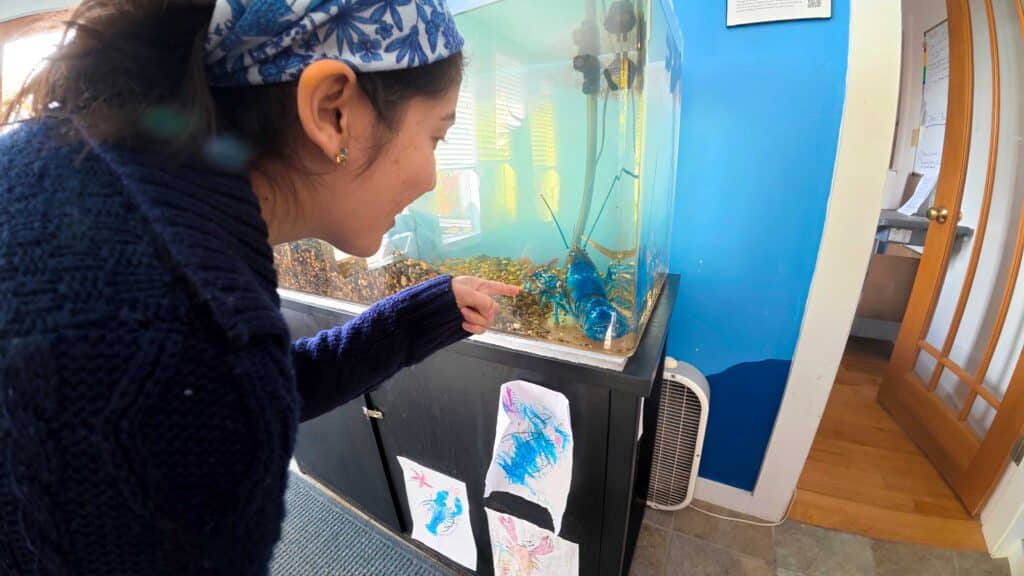
When people think of lobsters, usually their first thought is a bright red or burnt orange. But what if I told you that they come in all different shapes, sizes and colors?
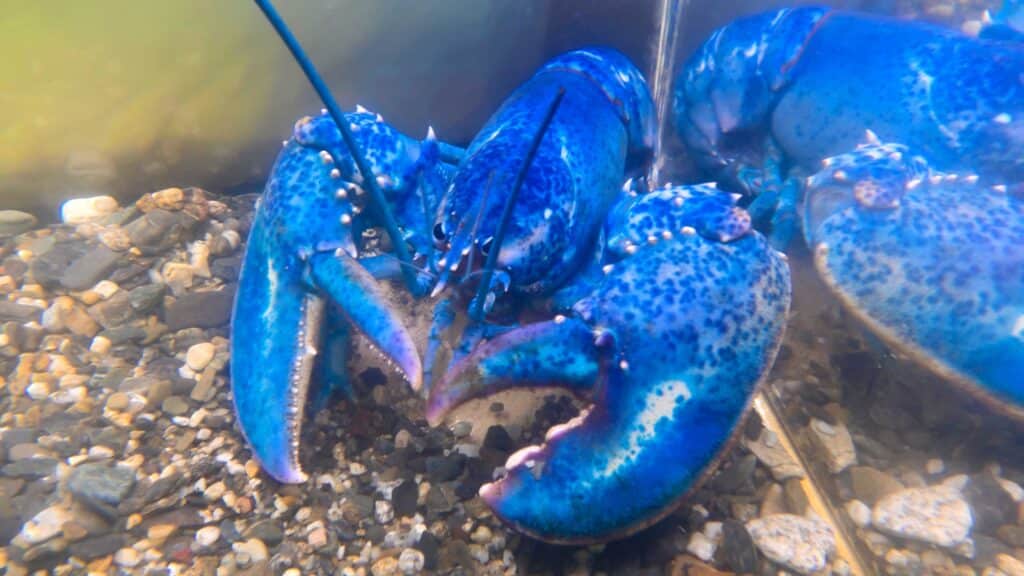
This summer, Shaw Institute welcomed a bright blue lobster, recently named Blucifer, into our Environmental Education Center. You can come and meet him in his tank, located in the Ocean room.
Why Blue?
Blucifer is not dyed or painted, his blue color comes from a genetic mutation that causes him to over produce a specific type of protein in his shell called crustacyanin. While some wild lobsters may turn a muddy blue over time, due to a lack of certain deficiencies in their diet, the vibrant color seen in Blucifer is all genetic.
The European lobster is a species of lobster that is naturally blue! What makes them different from the American lobster is that they have a slightly different genetic make-up. European lobsters produce more crustacyanin base proteins, which are long chains of amino acids that wrap around molecules to determine coloring. These proteins are what make their shell a blue color. The crustacyanin base proteins in the American lobster usually aren’t abundant enough to make a blue color, instead they get a rusty orange-brown color on their shell.
Can You Eat a Blue Lobster?
Don’t worry! We are not eating Blucifer!
But if you were to cook a blue American lobster, it would turn bright red, just like any other cooked lobster would.
This is because when you cook the shell of a blue lobster, the heat destroys the blue pigment’s protein chains. This same process turns the orange- brown color of a live lobster to the bright red that’s seen on posters and menus.
Even though Blucifer’s shell is blue, his insides still look like a completely normal lobster. He would taste the same too! The blue color only impacts his shell’s color and nothing else.
Survival in the Wild
Juvenile lobsters already have a hard time growing up. They have lots of predators such as fish, crabs, seals, and even bigger lobsters. So imagine that instead of having a muddy brown shell that helps you blend in, you have a bright blue shell that acts as a spotlight for their predators. Not great for a low-profile life!
We say that they are one in two million, but that number is just an estimate. Small lobsters that are bright blue might be more common than we know, but they probably get eaten before we have the chance to find them.
Because of this disadvantage, Blucifer had to grow up being the biggest and the baddest lobster on this side of the coast to make sure he wasn’t eaten! It’s most likely why he’s quite aggressive in our tank here, but that just proves how resilient he was out in the wild!
Fierce Nocturnal Predators
Lobsters are highly territorial crustaceans, they don’t like sharing their space with anyone. Lobsters will fight to the death for the perfect home in a nice rocky outcrop, or a perfect sandy divot.
When it gets dark, lobsters start to prowl. They’ll eat anything they find on the ocean floor. When lobsters are small, they forage what they can, but once they get big, they go out hunting for anything moving along the sea floor.
They’re favorite foods include sea urchins, fish, crabs, mussels, clams, smaller lobsters, and much more!
How Do They Pee?!
Out of their face! As a way to communicate with other lobsters, they will squirt pee out of their face, near where their antennae and eyes are located.
This pee tells other lobsters how big they are, what their sex is, and also their health status. Lobsters will also use their pee to assert dominance over food and territory before they start to fight.
Stomach Teeth
You can’t see them, but lobsters do have teeth, they are just located in its stomach. A lobster will swallow chunks of food whole, letting the teeth in their stomach grind the chunks down into smaller shreds.
They have three teeth in their stomach, all made of chitin, which is the same material as their shell. So that means that Blucifer also has blue teeth in his stomach!
Catch up with Blucifer
You can visit Blucifer and all our other critters at Shaw Institute’s Environmental Education Center at 55 Main St in Blue Hill, ME. Admission is currently free, but donations are welcome to keep our doors open and animals happy.
Support Our Educational Efforts
Hosting marine life for educational impact and awareness are made possible through the generosity of donors and supporters. Contributions to the Shaw Institute allow us to continue having a robust and attractive aquarium experience for our marine life and youth engagement. It allows the institute to host exciting events, conduct vital environmental research, and empower local youth to meet modern challenges with fresh perspectives. To support our mission and help inspire the next generation of conservationists, please consider making a donation to the Shaw Institute today.
—
Story written by Hana Johnson.