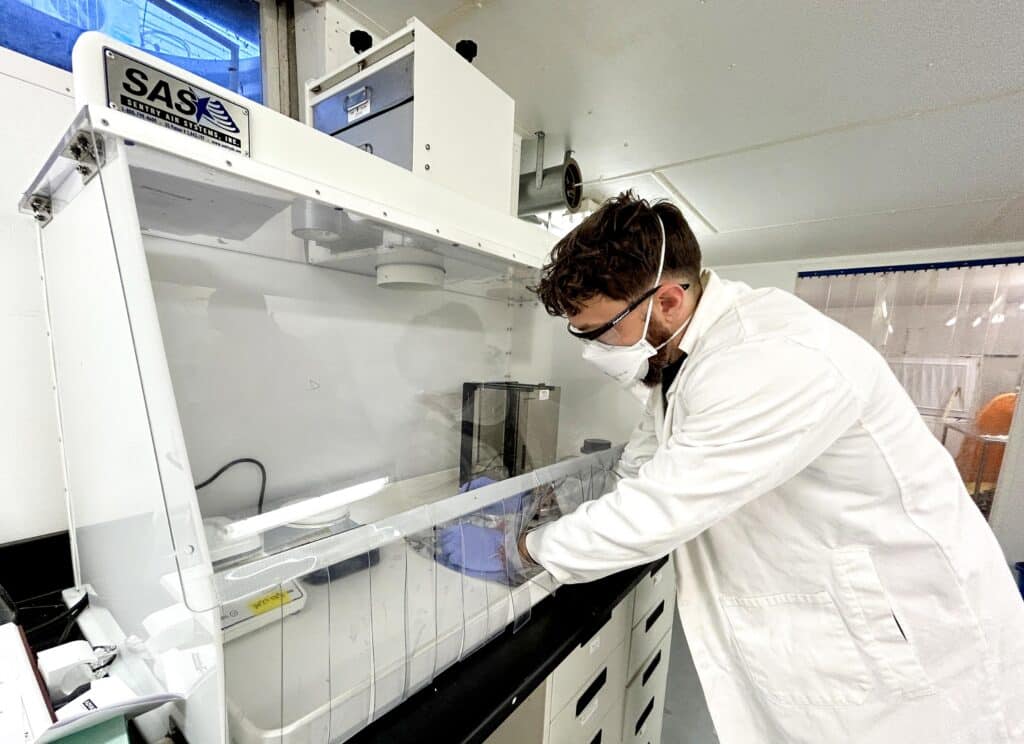
How a critical look at testing methods is paving the way for our landmark research on microplastics and neurological health.
You have probably seen the headlines: microplastics found in the human brain, liver, placenta, and more. These studies have changed how many of us think about plastic pollution, and they raise a question that everyone deserves a clear answer to: how much plastic is actually in our bodies?
We’re proud to share that a new paper from Shaw Institute, now accepted and published in the journal Next Research, takes a hard look at that question. It was led by our Executive Director, Dr. Charles Rolsky, with Shaw researchers Emon Das, along with Dr. James Brown and Cassidy Fredette Roman of Arizona State University.
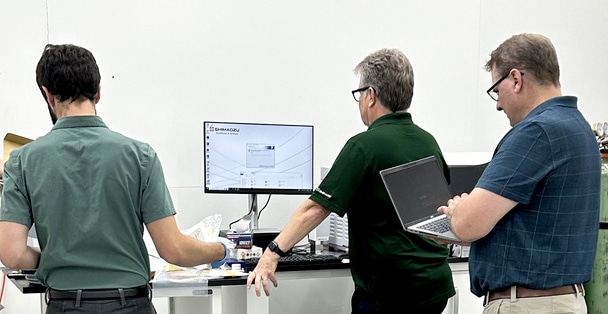
Many of the most widely reported numbers come from a laboratory instrument called a pyrolysis gas chromatography-mass spectrometer, or Py-GC/MS. In simple terms, a tiny sample is heated until it breaks apart, and the instrument identifies the fragments that come off of the heated sample. Certain fragments are treated as the “fingerprint” of a given plastic, and the amount of them tells you how much plastic was there.
It is a powerful tool. But human tissue is made up of a lot of different components, like prdrroteins and fats. We wanted to know how much confidence the method deserves when it is used on something as complex as a human organ.
Our team reviewed the published research and found a consistent problem: when natural fats are heated, they break into fragments that look very much like the fingerprint of polyethylene, the most common plastic in the world. If any fat is left in a sample being tested, the instrument can sometimes count some of it as plastic.
This matters most for the brain, which is about 60% fat. One prominent study reported brain concentrations that were 7 to 30 times higher than liver or kidney samples from the same people. That pattern is consistent with fat inflating the number, though it does not prove it.
What we are not saying is equally important.
Shaw Institute’s researchers are not saying plastic isn’t in human tissue. Other independent methods have confirmed that plastic particles are found in samples. Our point is that the exact amounts or impacts are difficult to initially understand, and results from different labs cannot yet be compared with confidence.
Before anyone can say what plastic does to our health, we need to know how much is actually present in samples. If the measurements are off, the health conclusions built on them will be too. Getting the numbers right is what allows doctors, regulators, and families to make decisions based on evidence instead of alarm or dismissal.
The paper does not stop at critique. It lays out three practical steps for future studies:
- Calibrate with real tissue. Test the method against tissue-like material so the interference from fats and proteins is measured and corrected.
- Confirm with a second method. No study should report plastic in human tissue from this one technique alone.
- Share the raw data. Open data lets other scientists check the work and build better, more transparent analysis tools.
We have built a foundation for future research
This paper is the foundation for research Shaw Institute is conducting right now. Our researchers are now analyzing human brain samples using the critical methods outlined in our paper as part of the largest research grant in Shaw Institute history. The grant will allow the institute to work collaboratively on a project with Arizona State University, examining the relationship between plastic pollution in the body and the development of Alzheimer’s disease during a person’s lifetime.
This work depends heavily on the question our paper raises. If we want to understand whether plastic in the brain is connected to a disease, we first have to be confident in how much plastic is present in the brain. We are building the lessons from this review into our own methods, with the goal of producing measurements that other scientists can verify and trust.
We will share results and what we learn as the project moves forward.
Support health research
This paper was completed without dedicated grant funding. Independent, careful, and meticulous science like this depends on people like you who believe it matters. Consider providing a gift to Shaw Institute that will directly support research and valuable information for our communities, as well as more collaborative opportunities across institutions, amplifying our impactful efforts.
See the report
The full paper, “Critical perspective of pyrolysis gas chromatography-mass spectrometry (Py-GC/MS) for the identification of microplastics in human tissues,” was published by Science Direct and made available online October 9, 2026. If you have questions on how to review the full paper, you can reach out to our Executive Director and Senior Research Scientist, Charles Rolsky.

About Shaw Institute
Shaw Institute is a 501(c)(3) non-profit scientific research organization based in Blue Hill, Maine. Established over 35 years ago, the Institute’s mission is to work to discover and expose environmental threats to the health and wellbeing of people, wildlife and the environments we share. Our research on plastics, ocean pollution, marine mammal health, toxic chemicals, and climate change has informed public opinion and influenced public policy, impacting millions of people in Maine, the U.S. and worldwide.