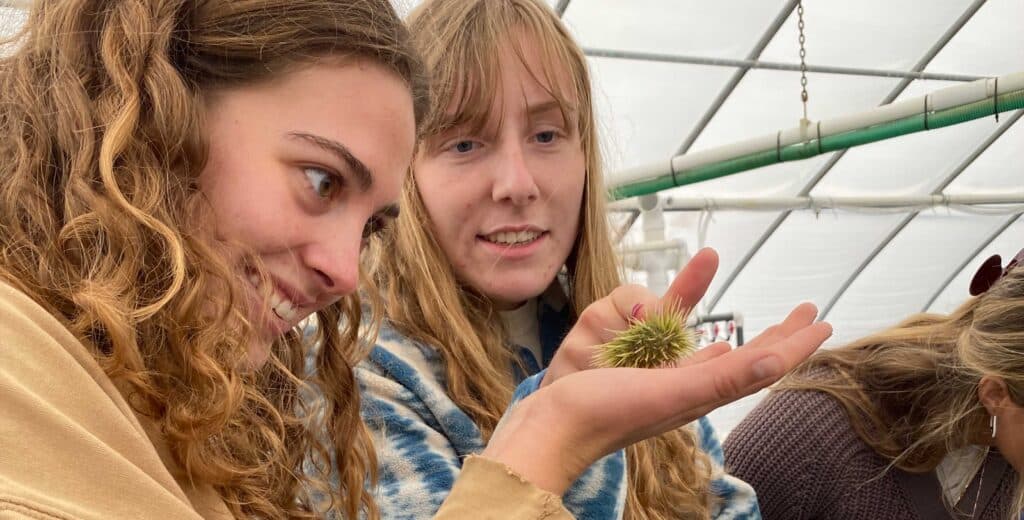
Former summer intern Gilly Denham shares how hands-on lab work, community science, and staff mentorship prepared her for field research with the Max Planck Institute.
For decades, we have been proud to educate and inspire over 75 college students within our summer internship program, fostering future scientists and stewards of the environment. “Where Are They Now?” is a Q&A series highlighting former interns, offering a look into their experiences with our team and how those moments continue to influence their professional journeys.
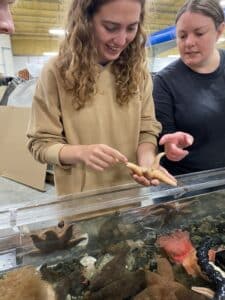
Interns work on a variety of projects, from our long-term monitoring of coliform bacterial pollution and harmful algal blooms in coastal waters, to phytoplankton identification, marine mammal strandings and analysis of plastic/microplastic contamination in environmental and human samples. Additionally, interns assist with our 200-gallon touch tank to communicate and engage with the public about our mission and vision at the environmental education center. It’s not only an invaluable experience for them, but also for our community.
Gilly Denham was an undergrad intern in the Summer of 2024 and graduated from Williams College in 2025 with a degree in Biology. After graduating she set off for a field expedition in the Democratic Republic of Congo. She recently returned home and caught up with our Education and Outreach Manager, Dani Rodriguez to share how Shaw Institute prepared her for her wild adventure.
Read on for our question and answer session with Gilly where she shares her internship journey and her future goals.
What attracted you to the Shaw Institute, and why did you choose to intern here?
I heard about the Shaw Institute through my friend Johnny, who lives in Deer Isle. He was very enthusiastic about the work the Institute was doing after meeting Charlie Rolsky, the Institute’s executive director. He emphasized its strong connection to the local community and at the time that’s what I was looking for in a summer opportunity, so it was a perfect fit.
What were your primary responsibilities during your internship?
My responsibilities included a mix of field work and lab work:
- Gathering water samples from local beaches for bacterial testing and phytoplankton analysis.
- Constructing and setting up touch tanks to support community education and outreach.
- I got to help process human placentas for microplastics analysis with Charlie, in the lab as part of a study with New York University (NYU).
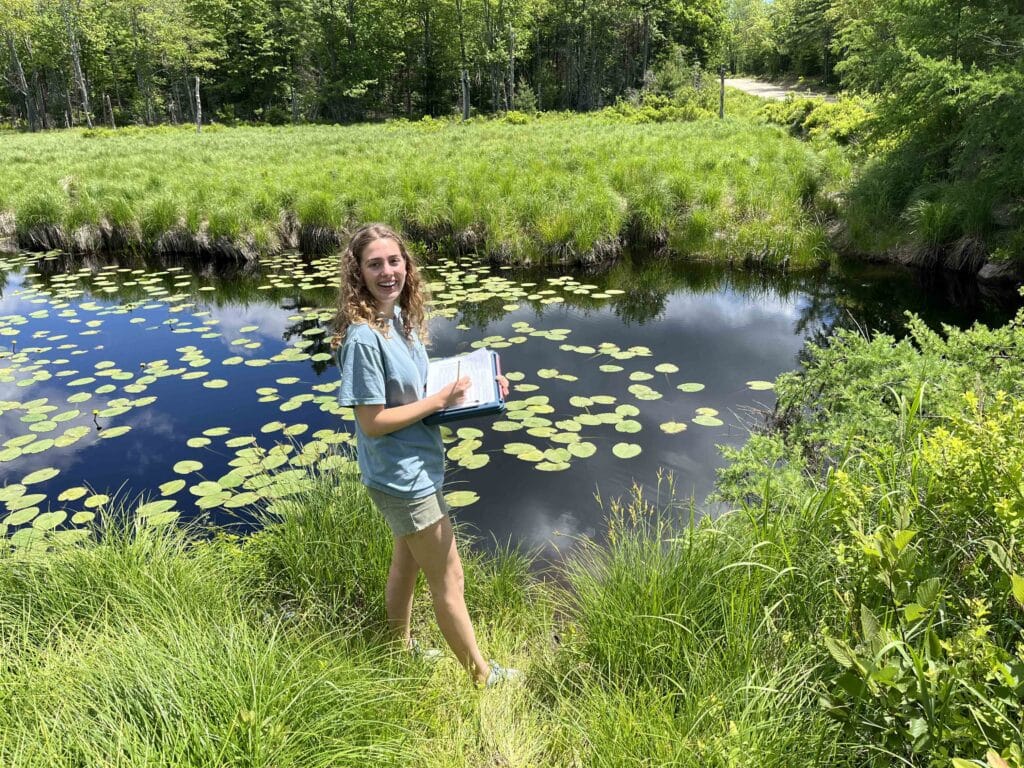
- I also contributed to the PFAS monitoring project funded by the Maine Outdoor Heritage Fund to examine (PFAS) contamination in Blue Hill’s water. I helped collect samples from local streams around the area to help understand the overall extent and severity of PFAS contamination in Blue Hill.
What was your favorite part of the internship?
I loved the fieldwork because it allowed me to explore the area and work right at the beach taking samples, which had an immediate practical impact for the community. I also found the human tissue/microplastics research incredibly unique and fascinating for an undergraduate internship.
What did you do after graduating?
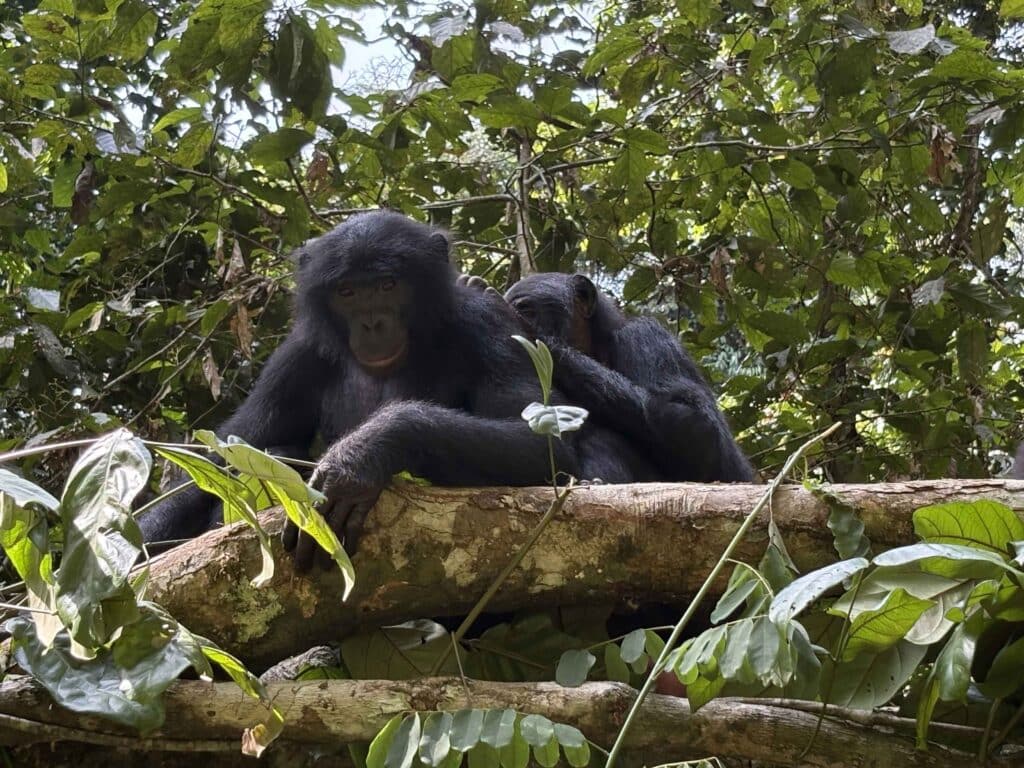
Right after graduation, I spent nine months in a remote research camp in the Democratic Republic of the Congo. I worked with a team of international researchers and local villagers studying wild bonobo populations for the LuiKotale Bonobo Project through the Max Planck Institute of Animal Behavior. Our daily work involved tracking bonobos from nest to nest (12-13 hours a day), recording observations of their social behavior, mapping GPS locations, and contributing to a 20-year long-term database.
How did your internship at the Shaw Institute help prepare you for your future path?
Beyond field and lab skills, the internship gave me a first hand look at how science connected directly to the local community but also the real world. That perspective helped guide how I approached field research and community interaction in the Congo. It also provided valuable mentorship and guidance from staff on navigating graduate school applications and career options in research.
What are your current goals and future plans?
I’m currently applying to PhD programs focused on wild ape research (chimpanzees and bonobos) and conservation. My goal is to continue working with long-term field research sites and conservation organizations.
What stands out as the most memorable moment from your time at the Institute?
Working directly with human placenta tissue in the lab for the microplastics study—a truly unique experience for a summer internship—and getting to build genuine personal relationships with the staff and fellow interns.
Support future interns
Our internship program is made possible through the generosity of donors and supporters like you. Contributions to the Shaw Institute allow us to continue hosting impactful mentorship opportunities, events, environmental research, and outreach initiatives that meet modern challenges with grace, resilience, and fresh perspectives. To support our mission and help inspire the next generation of environmental stewards, please consider making a donation to the Shaw Institute today.